


Severely damaged hair is not merely a case of dryness, it is a clear indication that the internal hair structure has been deeply compromised. When the outer protective layer is no longer intact and the hair core is weakened, regular moisturising treatments are no longer sufficient. Understanding the nature of severe hair damage is essential for choosing the right restoration approach, rather than relying on ineffective care routines.
-
What is severely damaged hair?
Severely damaged hair refers to a condition in which the hair fibre is compromised deep within the cortex, the layer that contains keratin and determines the hair’s strength and elasticity. When hair is repeatedly exposed to bleaching, colouring, perming, heat styling, or improper care over time, the internal protein bonds begin to break down.

Unlike mild damage, which mainly results in temporary dryness, severe damage indicates that the internal structure has weakened. At this stage, hair not only becomes dry but also brittle, fragile, and unable to recover naturally.
-
Signs of severely damaged hair
Many people struggle to distinguish between dry hair and severe damage; however, several clear indicators can help identify the condition.
One of the most noticeable signs is a significant loss of elasticity. When gently stretched, a strand of hair may snap immediately rather than extending and returning to its original form. The hair often feels rough, weak, and lifeless to the touch.
Another common sign is widespread split ends accompanied by increased breakage. Hair may snap along the shaft rather than only at the ends, while overall thickness gradually decreases over time.
Other visible signs include:
– Persistent dryness despite regular conditioning
– A frizzy texture with a lack of natural shine
– Frequent tangling and difficulty detangling, even when the hair is damp
If multiple signs appear simultaneously, it is likely that the hair is severely damaged rather than simply lacking moisture.
-
Causes of severe hair damage
Most cases of severe hair damage result from repeated chemical processing. Bleaching is one of the most common causes, as it not only removes natural pigment but also directly disrupts keratin bonds within the hair core.
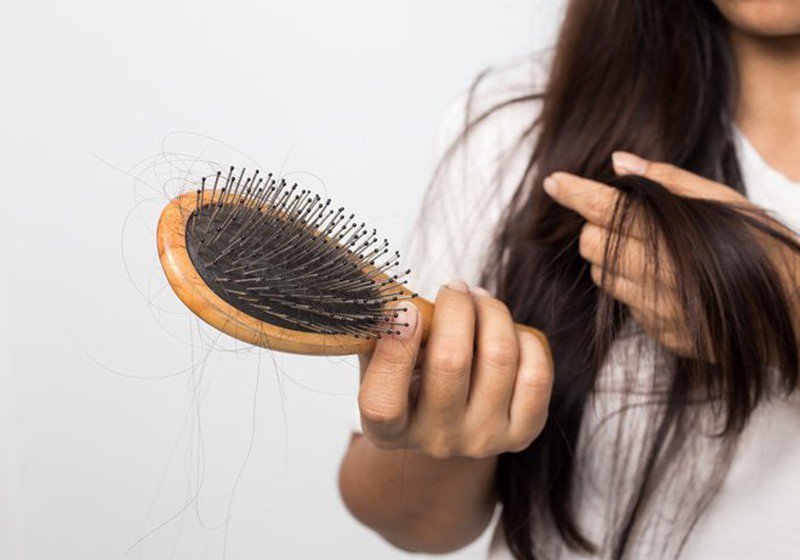
In addition, frequent colouring within a short period, high-temperature styling, and the use of harsh chemical products can accelerate structural deterioration. As the cuticle layer erodes, the inner hair core loses its protective barrier and becomes increasingly vulnerable to environmental stress.
Without proper restoration, severely damaged hair will continue to deteriorate and cannot be effectively improved with conditioner or basic hair masks alone.
-
Why is severely damaged hair difficult to restore?
The primary challenge lies in the breakdown of the internal structure. Once protein bonds are disrupted, the hair loses both elasticity and strength.
Most chemical conditioning products act only on the surface, making the hair feel softer in the short term. However, once these coatings are washed away, the hair quickly returns to its dry and fragile state because the internal structure remains unrepaired.
This explains why many people maintain regular treatments yet see little improvement. Surface-level care cannot replace true structural restoration.
-
The right approach to treating severely damaged hair
Once severe damage is identified, the first step is to minimise further harm. This includes temporarily avoiding bleaching, colouring, and high-heat styling.
At the same time, trimming heavily damaged ends is recommended to prevent split ends from spreading further. This helps reduce stress on the hair and supports the recovery process.
Most importantly, it is essential to choose a professional deep repair treatment. An effective approach typically focuses on:
– Replenishing essential proteins and amino acids
– Rebuilding internal keratin bonds
– Restoring deep moisture balance within the hair shaft
Only when the internal structure is reinforced can severely damaged hair improve in a sustainable way.
-
Multi-layer repair as an effective solution
For severely damaged hair, multi-layer repair is considered one of the most effective approaches because it targets multiple levels of the hair structure. Rather than simply softening the cuticle, this method focuses on rebuilding the inner core and then sealing the surface to retain nutrients.

As a result, the hair not only feels softer but also gains improved elasticity, reduced breakage, and greater resilience during future styling.
This is the key distinction between intensive restoration treatments and conventional conditioning methods.
-
Explore multi-layer repair services at Omnia
If you are dealing with severely damaged hair, accurately assessing its condition before treatment is crucial. An effective solution should be tailored to the specific level of damage rather than applied uniformly.
At Omnia Hair Boutique, multi-layer repair treatments are designed to reconstruct the hair from within, with a focus on strengthening internal protein bonds. Each treatment is customised to restore elasticity and vitality, creating a healthier foundation before any further chemical services.
When the internal structure is properly restored, even severely damaged hair can be significantly improved. The key lies in choosing a targeted, professional solution rather than relying solely on temporary surface treatments.
OMNIA HAIR BOUTIQUE
Better style. Better life
Branch 1: Villa D13, The Manor, Do Dinh Thien Street, My Dinh 1, Nam Tu Liem, Hanoi
Hotline: 098.666.0036
Branch 2: E1.S08, Building E1 D’El Dorado Tan Hoang Minh, 659A Lac Long Quan, Tay Ho, Hanoi
Hotline: 096.553.1886
Fanpage: https://www.facebook.com/omniahairboutique
Tiktok: https://vt.tiktok.com/ZSdWdU93G/
